Vide
An assistive wearable for blind and low-vision people: multi-point distance sensing, the obstacle classified on the device, directed haptics — deliberately no audio channel and no cloud round-trip.
- Role
- Project author; Co-Founder & CEO of NovelVisio
- Organisation
- NovelVisio
- Period
- 2018 – present
- Stage
- Prototype
- Research & method
- Mechanical
- Electronics
- Firmware
- Applied AI
- Product
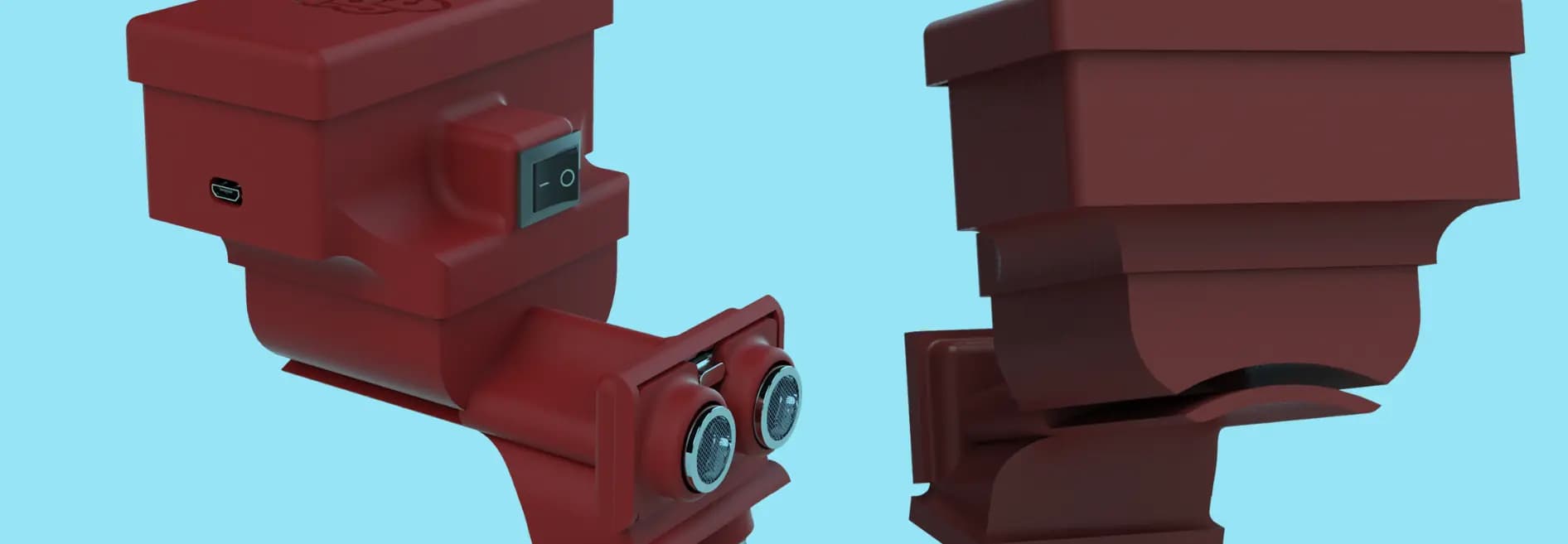
PL.01
Vide cap-mounted prototype visualisation.
Vide began in 2018 as a school invention — a corrective sensor system for visually impaired people — and took third place at the Leonardo da Vinci competition that year, in an announcement by the Ministry of Education and Science that named Nata Sulakvelidze and Gvantsa Machitidze as the awarded authors. It became the flagship product of NovelVisio, which I co-founded in March 2021, and won a GEL 100,000 GITA co-financing grant in 2021. The device senses distance at several points around the wearer, classifies obstacles on the device itself, and returns the result as directed haptics. It uses no audio channel — hearing is the user’s primary sense and the device must not occupy it — and no cloud round-trip, so the answer arrives in the same second the obstacle appears.
The problem
The assistive-vision products that reach the market are built around cameras and language: they describe the scene aloud. For a person who navigates by hearing, a voice in the ear is an obstruction, not a feature. The useful signal is the edge of the world, delivered as touch, at the latency of a reflex. That one constraint decides the architecture: sensing at multiple points around the head, classification that runs on the wearable rather than on a server, and a haptic channel carrying a direction the user can read without thinking.
What was built
- 01
Multi-point distance sensing around the wearer, so detection covers the path and the obstacles at head and torso height, not only what a single forward-facing camera sees.
- 02
Obstacle classification on the device. Nothing waits for a network round-trip.
- 03
Directed haptic output, so the user feels which side the obstacle is on.
- 04
No audio channel, by design: the device leaves hearing free.
- 05
The mechanical form followed the constraint. The first build was mounted on a cap and photographed on a head, because a wearable that people will not wear is not a product.
What it produced
Numbers I can stand behind. A number I cannot stand behind is not on this page.
Third place at the Leonardo da Vinci competition in 2018, a GEL 100,000 GITA co-financing grant in 2021, and a device that has travelled from a school bench through a cap-mounted prototype toward a manufacturable assistive wearable. How many units exist today, and whether Vide is a product, a pilot deployment or still R&D, is an owner answer that has not arrived — so the record stops at prototype and says so.
100,000 GEL
GITA co-financing grant awarded to the device
forbeswoman.ge and cbw.ge, recorded in research/03-fact-verification-report.md §3.1
In pictures
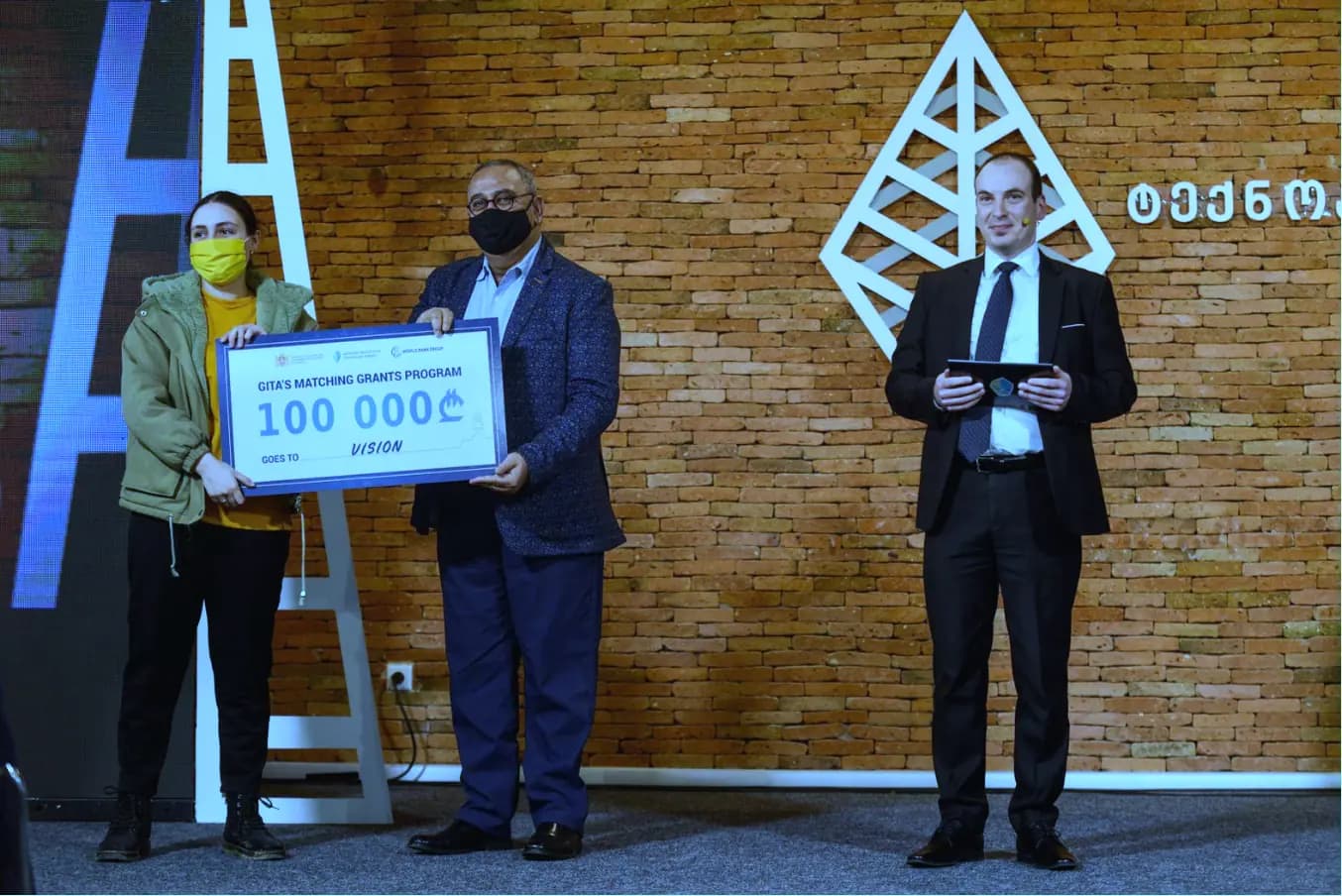
PL.02
VISION team at the GITA 100,000 GEL award presentation.
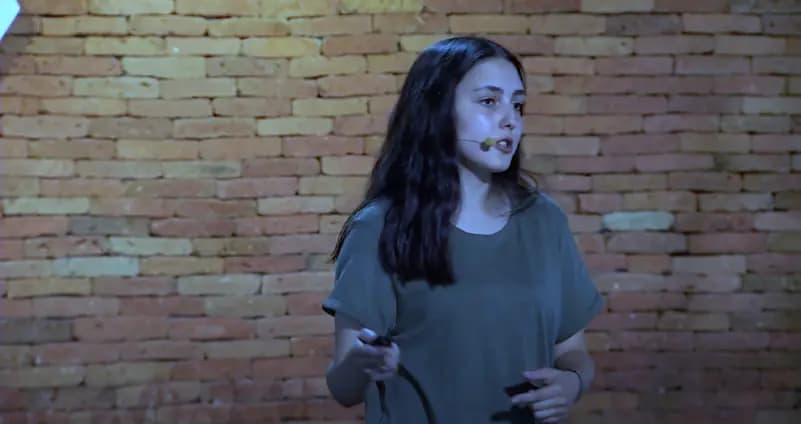
PL.03
Nata Sulakvelidze presenting the project.
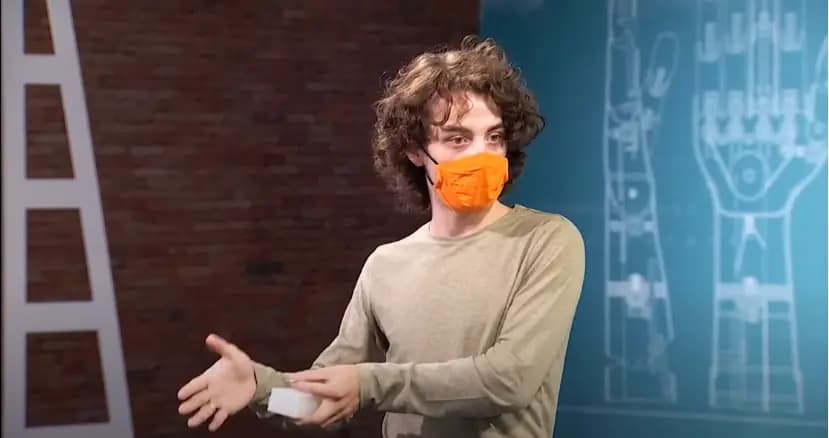
PL.04
Anzori Kuparadze presenting the project.
Funding
2021 · Georgian Technology & Innovation Agency (GITA)
VISION (Vide)
100,000 GEL
Awards
2018 · 3rd place
Third place — corrective sensor system for visually impaired people
Leonardo da Vinci Young Inventors Competition
2017 · Finalist
Finalist in every year from 2017 to 2025, with multiple awards
Leonardo da Vinci Young Inventors Competition
The other case studies
2022 – present · Production
G3D fused-filament 3D printers
A Georgian manufacturer of fused-filament 3D printers: three production platforms, from a 220 mm desktop machine to a one-metre industrial cell, designed, built and sold out of Tbilisi.
Read the case study →2019 – present · Pilot
DAWTONE diagonal-axis wind turbine
A diagonal-axis wind turbine whose conic geometry was patented in 2022 and turned into a product family rated from 100 W to 5 kW, including a portable variant.
Read the case study →