SimTwin
A discrete-event simulator for 5G/LTE telemetry, built to answer one question: what does a digital twin look like when the network feeding it is lossy, delayed, and shared with everything else on the cell?
The hard problem of a digital twin is not building the twin. It is knowing what the twin believes about the plant, and what happens when the channel feeding it is lossy, delayed and shared with everything else on the cell. SimTwin measures that gap.
The simulator does four things at once: it builds a large fleet, injects faults, impairs the network — loss, latency, duplication, outage — and maintains the twin from arrived traffic alone. Then it asks whether the injected fault is recoverable from telemetry alone, and at what distance.
The simulator on this page runs in the browser, on a worker thread. The numbers it prints describe the mechanism, not the paper’s measurements — those are listed separately, with their source.
1 000
printers simulated in one fleet
70 363
messages per second through the broker
42
tests, 5 of them against a live Mosquitto broker
10 / 11
fault families separable at |d| ≥ 1.45
The four figures above are the paper’s measurements, read off the manuscript. What runs below is the browser port, and it shows the mechanism.
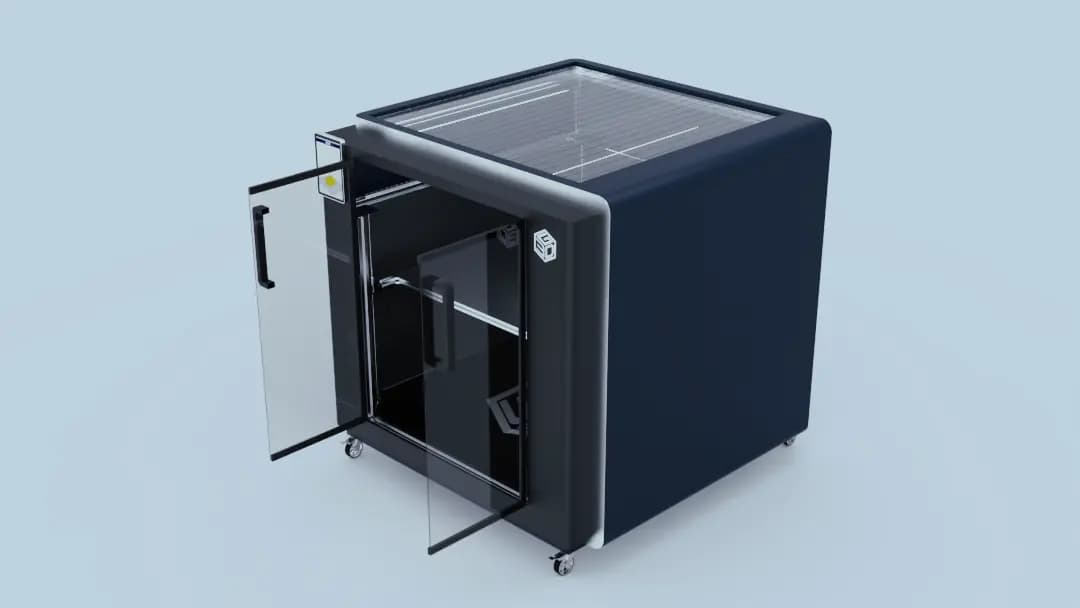
PL.01
The G3D Starter — a desktop fused-filament printer, built in Tbilisi.
The simulator models a fleet of fused-filament printers; this is one of the production platforms it models — the plant, not the twin.
The twin, running
This is the simulator from the paper, ported to the browser. Set a fleet, impair the channel, inject a fault into the plant, and watch what the twin is left believing. The numbers are the mechanism, not the paper’s measured figures.